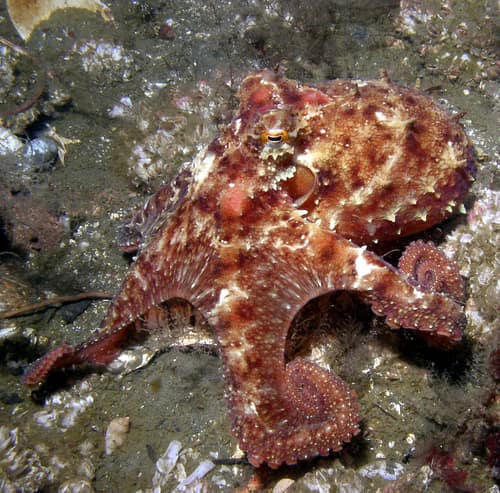
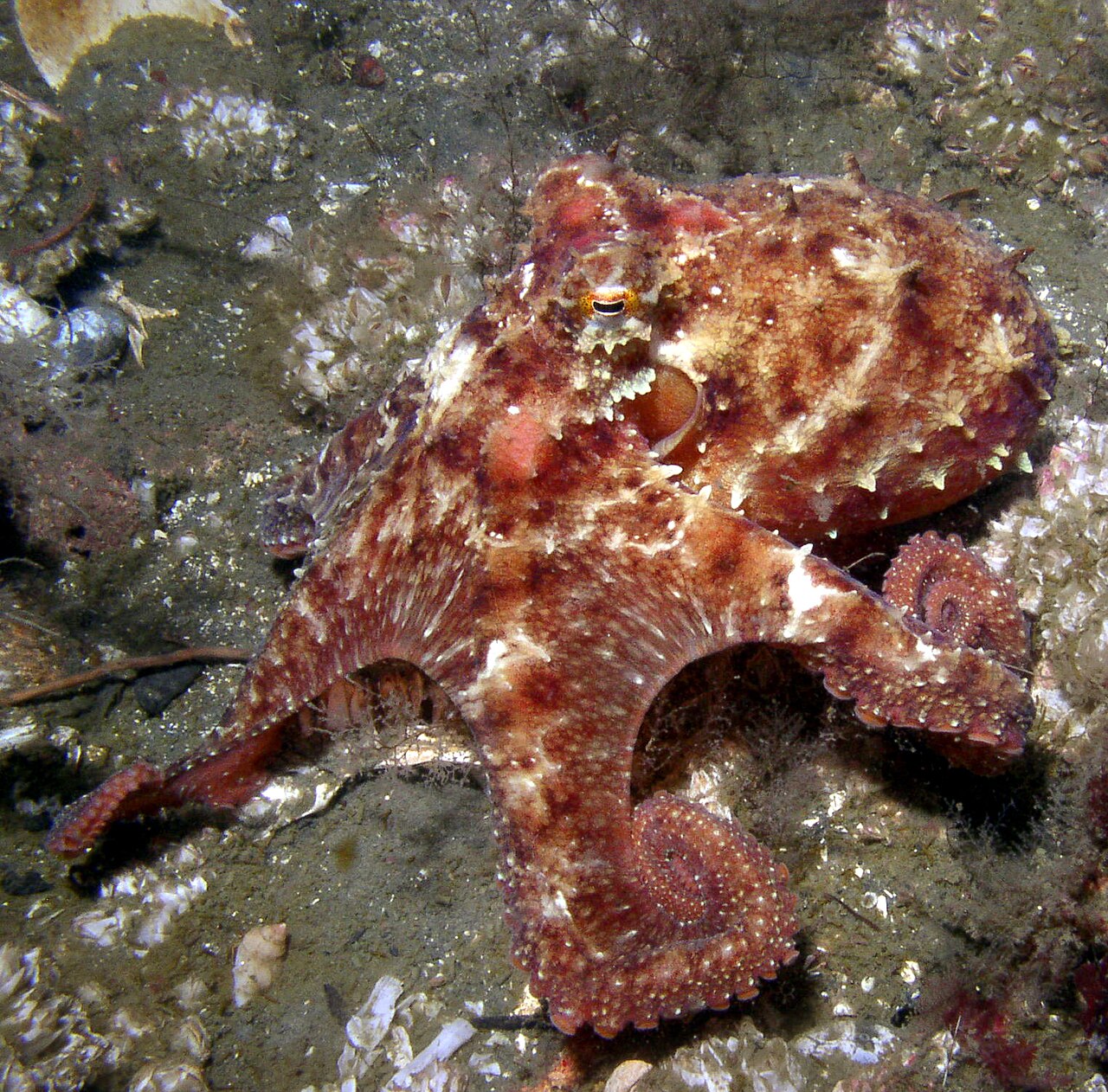
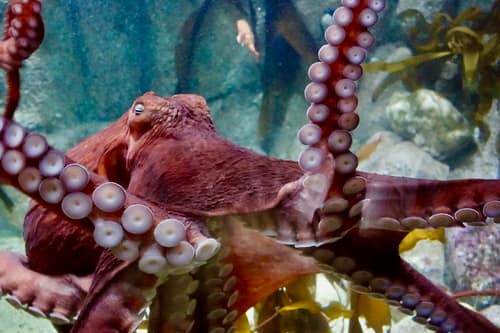
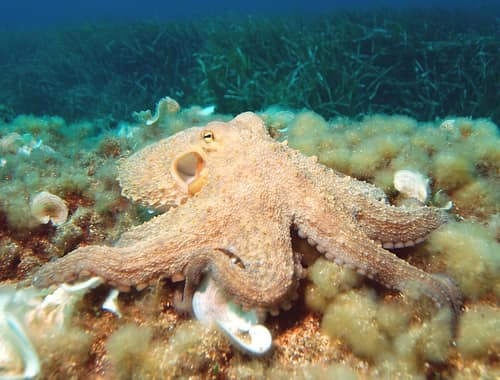
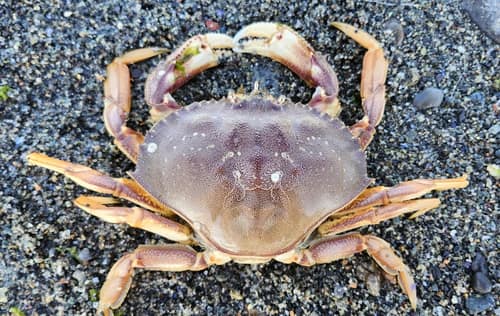
East Pacific red octopuses are cunning nocturnal hunters that prowl rocky reefs, kelp forests, and sandy shallows along the Pacific coast. They use rapid color-changing chromatophores and skin papillae to mimic encrusted rocks, kelp fronds, or silty seafloors within milliseconds. Females lay thousands of tiny rice-shaped eggs inside secluded dens, guarding and aerating the clutch without feeding until they perish shortly after the young hatch.
ThreatsCoastal pollution, habitat degradation, and ocean warming
HabitatsTide pools, rocky reefs, kelp forests, and sandy or muddy ocean bottoms
Life span1–2 years
Size / weightNot available
Classification
FamilyOctopodidae
SpeciesOctopus rubescens
Range & activity
Range data is not available yet.
Safe observation
Interaction riskVery high
Low
Moderate
High
Very high
Why interaction risk is very high
Bites deliver toxic saliva causing swelling and sharp pain; do not handle.
Why it is dangerous
Salivary glands secrete cephalotoxin, a fast-acting venom that paralyzes prey and causes burning pain, intense local swelling, and tissue numbness in humans.
How to recognize a risky encounter
Look for a rust-red to mottled reddish-brown body with three white spots under each eye and arms roughly three times mantle length.
What to do
Never handle live individuals in tide pools or fishing gear; allow them to retreat safely into water.
Responsible observation
Tidepool Etiquette: Look gently under ledges without rolling heavy rocks or disturbing delicate holdfasts.
Night Spotting: Use a red-filtered dive light after dark to watch natural foraging behavior without blinding them.
No Handling: Keep hands clear of crevices since defensive bites contain toxic saliva that produces lasting numbness.