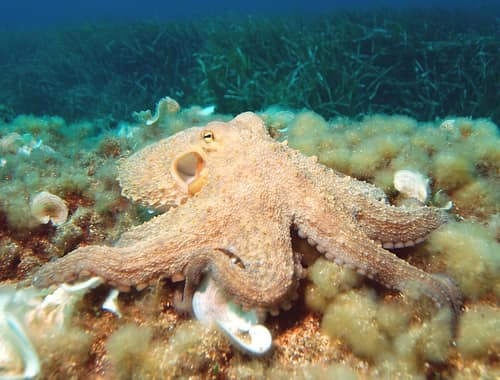
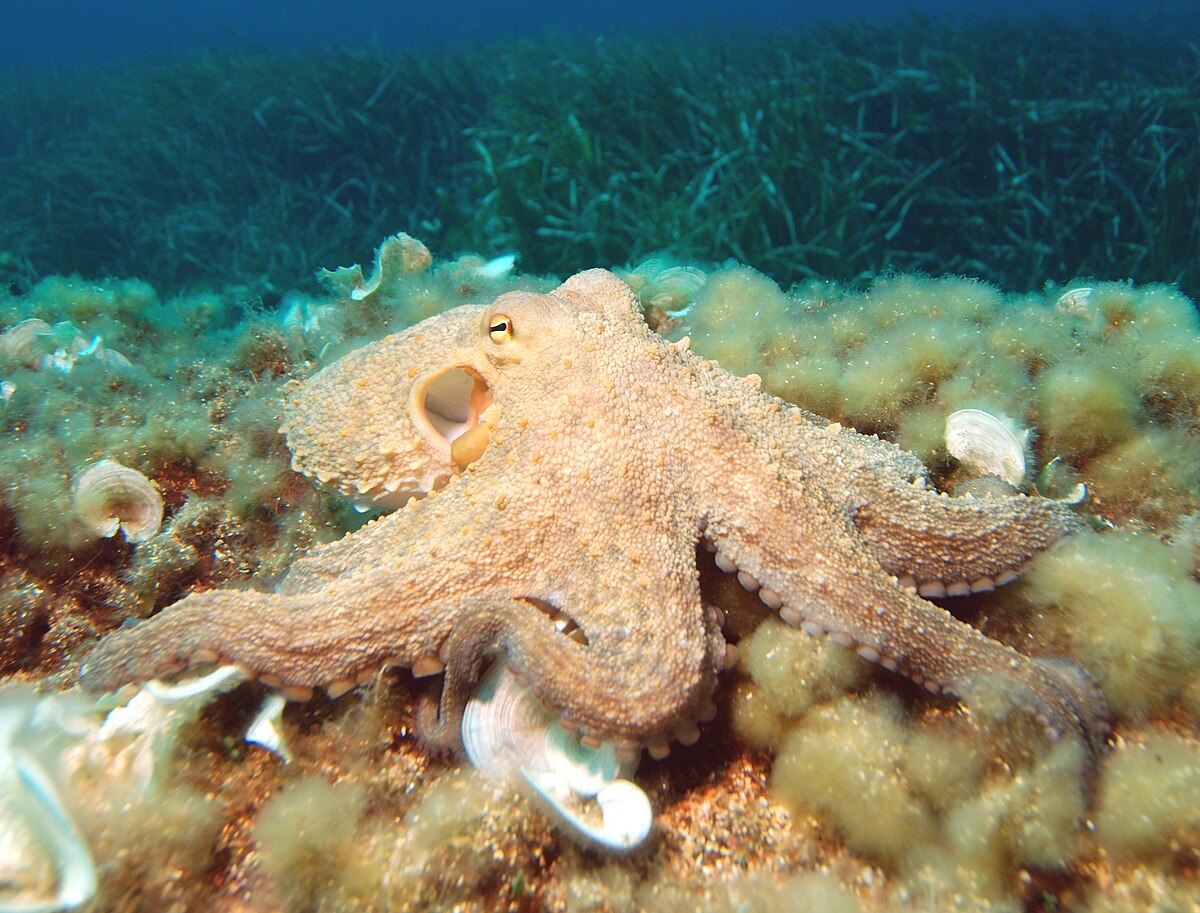
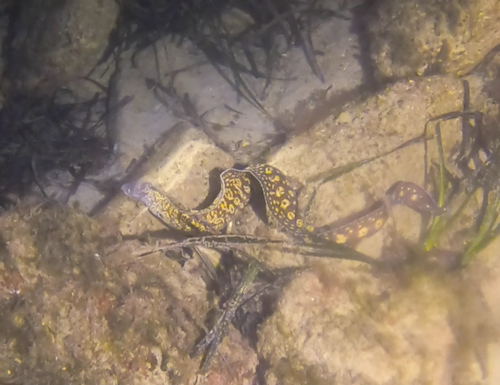
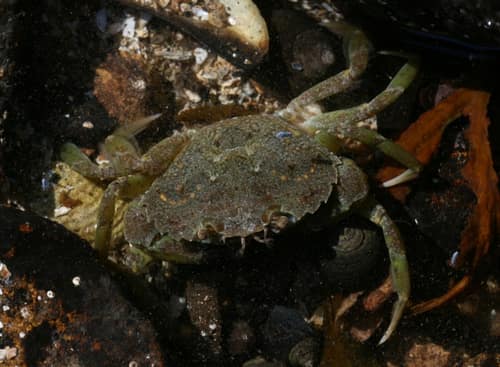
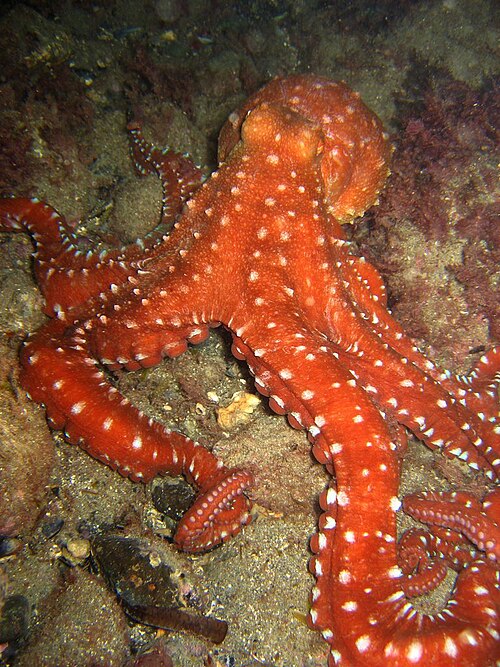
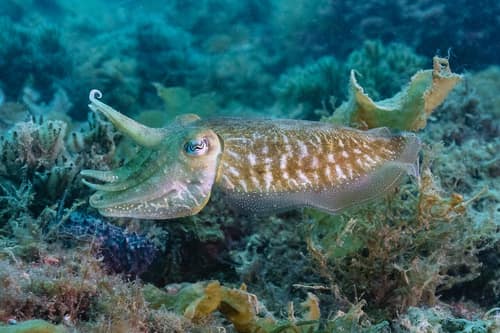
Common octopuses are masters of camouflage, altering their skin texture and color in milliseconds to match rocky seafloors, coral heads, or rippling algae. Primarily solitary hunters, they construct dens fortified with discarded shells and stones, venturing out mainly at dusk to scour reefs and sandy shallows for crustaceans. Females display remarkable maternal devotion, brooding thousands of suspended eggs without feeding for up to two months, perishing shortly after their offspring hatch.
ThreatsCommercial bottom-trawling, trap fishing, plastic pollution, and ocean warming.
HabitatsRocky reefs, seagrass meadows, kelp forests, and soft sediment bottoms down to 200 meters.
Life span1–2 years
Size / weightNot available
Classification
OrderOctopoda
FamilyOctopodidae
GenusOctopus
SpeciesOctopus vulgaris
Range & activity
N. Atlantic S. Atlantic Mediterranean
Marine distribution — the ocean basins and seas where the species occurs.
Safe observation
Interaction riskLow
Low
Moderate
High
Very high
Why interaction risk is low
Possesses a sharp chitinous beak capable of a painful puncture wound; admire without handling.
Why it is dangerous
Equipped with a powerful parrot-like chitinous beak and mildly paralyzing digestive saliva used to dispatch prey, which can inflict painful, slowly healing puncture wounds in humans.
How to recognize a risky encounter
Easily recognized by eight equal-length arms lined with two rows of suction cups, large expressive eyes, and rapid shifts in skin texture and coloration from mottled brown to pale grey.
What to do
Do not attempt to pull an individual from a crevice or handle it with bare hands; observe peacefully from a neutral buoyancy.
Responsible observation
Spot the Den: Look for small excavated crevices framed by an orderly pile of cracked crab carapaces and mollusk shells.
Observe Passive Posture: Divers should maintain a respectful distance to watch undisturbed feeding and natural shifts in skin pigmentation.