
Invertebrate · GBIF taxon 2278856
Arctic Green Sea Urchin
Strongylocentrotus droebachiensisAlso known as Green Sea Urchin, Northern Sea Urchin
Green sea urchins are keystone kelp-grazers capable of transforming lush offshore forests into barren rockscapes when predator populations decline. They creep along rocky reefs and boulder fields using hundreds of tiny, suction-tipped tube feet coordinated with mobile defensive spines. In early spring, adults aggregate on sunlit shallows to broadcast millions of gametes into icy ocean currents.
MarineHerbivorousCircumpolar
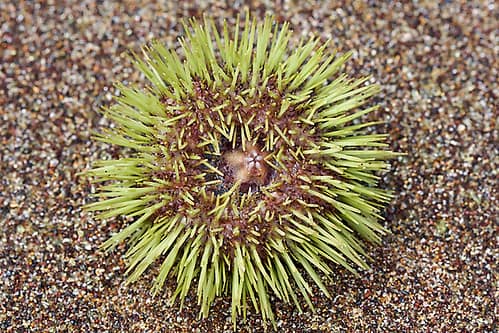
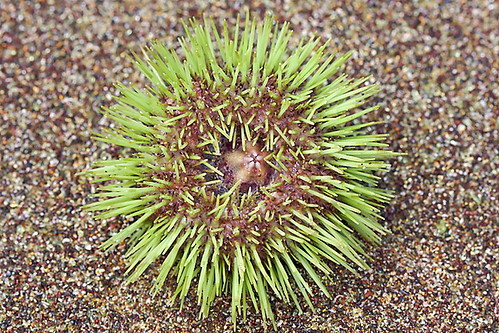
—observations
—countries
—peak records
Not EvaluatedConservation statusIUCN Red List categoriesLCNTVUENCREWEXNot Evaluated — not placed on the risk ladderRed List categories, explained →
Diet & prey
- Bull kelp
- Sugar kelp
- Encrusting coralline algae
Predators
- Sea otter
- Wolf eel
- Common eider
ThreatsOcean warming, marine heatwaves, and commercial overharvesting
HabitatsRocky intertidal zones, subtidal kelp beds, and boulder reefs down to 1,100 m
Life span20–50 years
Size / weightNot available
Classification
- FamilyStrongylocentrotidae
- SpeciesStrongylocentrotus droebachiensis
Range data is not available yet.
Interaction riskLow
- Low
- Moderate
- High
- Very high
- Why interaction risk is low
- Spines can puncture bare skin; wear protective footwear in tide pools and do not handle barehanded.
Responsible observation
- Footwear: Wear sturdy water shoes or boots when wading across rocky low-tide shallows to avoid painful punctures.
- Handling: Never pry individuals off rocks, as their tube feet tear easily and injure the animal.
- Observation: Watch underwater with a mask at slack tide to see their feeding jaws, known as Aristotle's lantern, scraping algae.
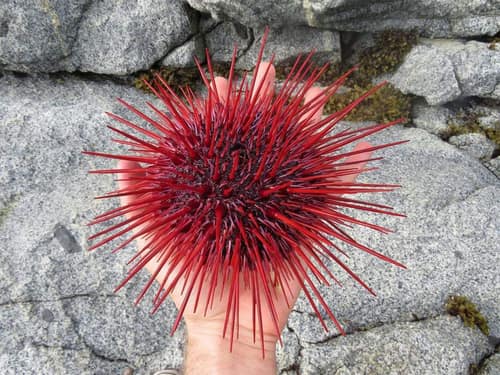
Competitor no rights reserved, uploaded by Braden J. Judson · cc0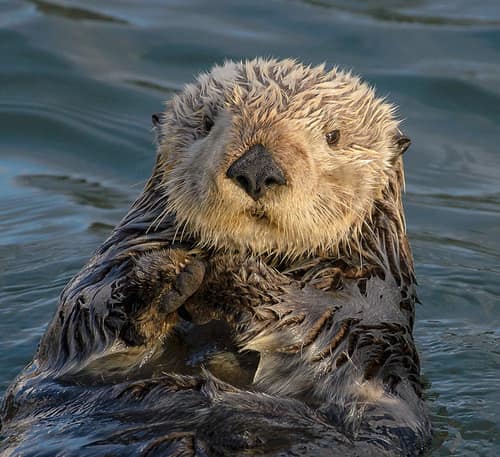
Predator Marshal Hedin from San Diego / CC BY-SA 2.0 · cc-by-sa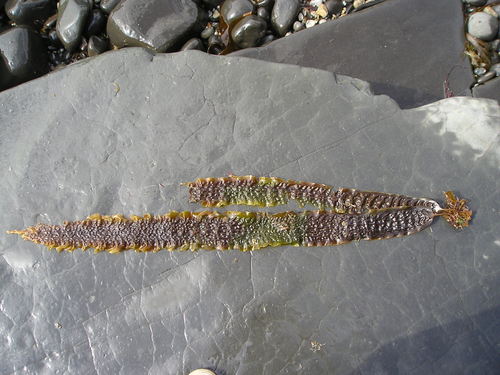
Prey (c) Cwmhiraeth, some rights reserved (CC BY-SA) · cc-by-sa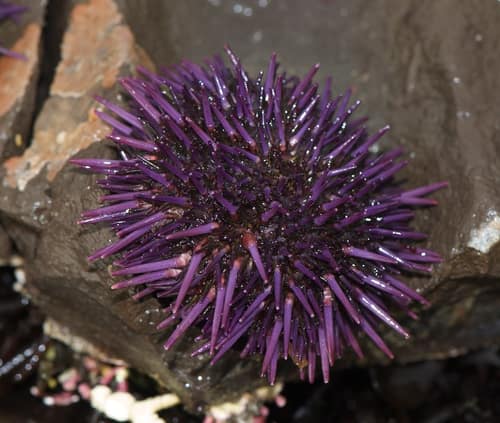
Close Relative (c) Jerry Kirkhart, some rights reserved (CC BY) · cc-by
Help improve the field guideSomething wrong?
Checking your Fauna account…Report a name, category, or profile issue for review.