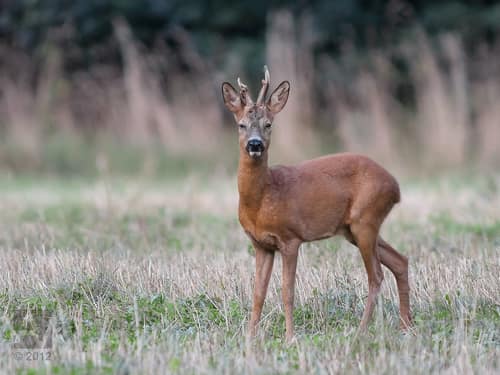
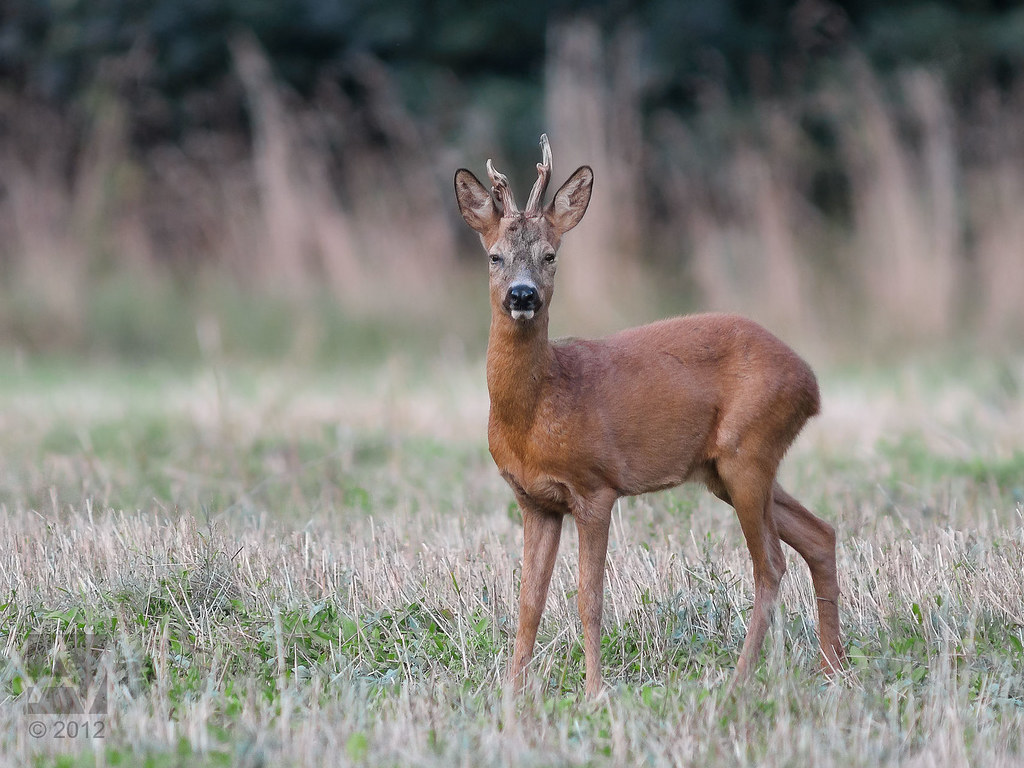
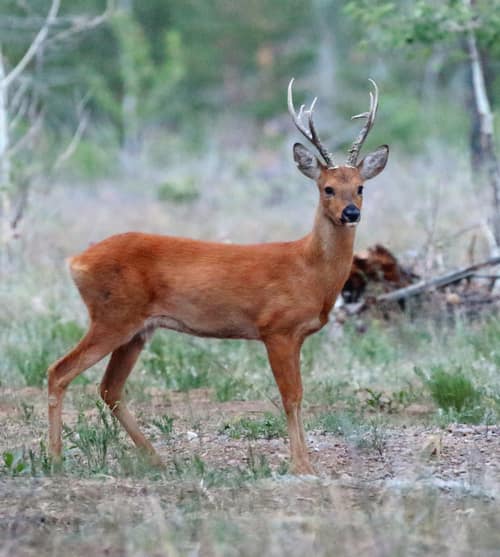
Western roe deer are nimble forest browsers that flash an erect white rump patch and emit sharp, dog-like barks when alarmed. Uniquely among deer, does employ delayed embryonic implantation, holding fertilized blastocysts in developmental stasis for months so fawns emerge during lush late spring. Highly territorial bucks mark woodland saplings each spring using forehead scent glands, fraying tender bark with their short, three-tined antlers.
Selective browser feeding on fresh herbs, tree shoots, buds, leaves, and berries
Predators
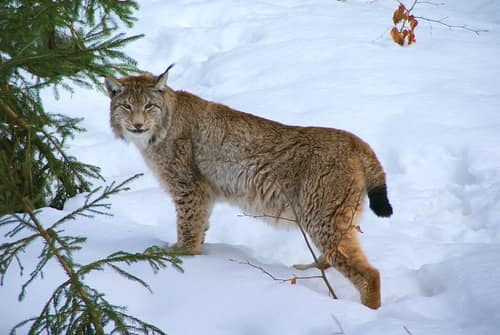
Eurasian Lynx
Grey Wolf
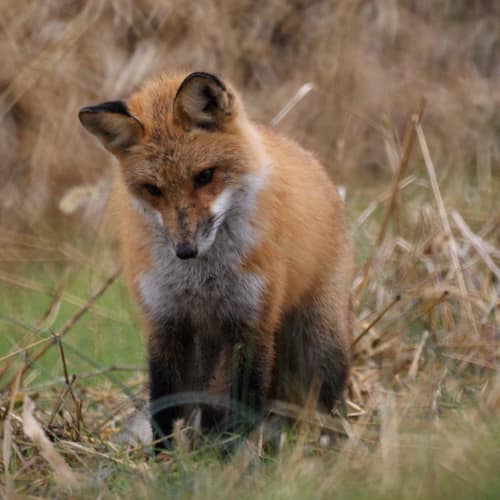
Red Fox
ThreatsCollisions with motor vehicles, automated silage cutting of hidden fawns, and habitat fragmentation
HabitatsDeciduous and mixed forests, woodland edges, agricultural meadows, and shrublands
Life span10–12 years in the wild
Size / weightNot available
Classification
OrderArtiodactyla
FamilyCervidae
GenusCapreolus
SpeciesCapreolus capreolus
Range & activity
Native
Safe observation
Interaction riskModerate
Low
Moderate
High
Very high
Why interaction risk is moderate
Hosts ticks capable of transmitting Lyme disease; avoid brushing through dense brush in deer territory.
Why it is dangerous
Acts as an abundant reservoir host for castor bean ticks (Ixodes ricinus), which transmit Borrelia bacteria and tick-borne encephalitis virus to humans.
How to recognize a risky encounter
Small, slender deer lacking an obvious tail, showing a bright white rump patch and reddish summer or grey-brown winter coat.
What to do
Keep to clear trails, wear tick repellent, and perform a full-body tick check after traversing known deer habitat.
Responsible observation
Viewing Timing: Scan field margins and forest clearings at dawn and dusk when feeding activity peaks.
Fawn Welfare: Leave lone, motionless fawns undisturbed, as mothers intentionally hide them from predators.
Road Caution: Slow down along rural forested roadways, especially during the spring dispersal and summer rut.