
Insect · GBIF taxon 5156102
Western Conifer Seed Bug
Leptoglossus occidentalisAlso known as Pine Seed Bug
Western conifer seed bugs feed on the sap and embryonic seeds of pines, firs, and spruces using piercing-sucking mouthparts. In autumn, adults frequently seek warm overwintering shelters, clustering on exterior walls and wandering into homes where their buzzing flight and leaf-like hind legs cause alarm. When threatened or crushed, they release a pungent pine-scented chemical defense from thoracic glands to deter predators.
HerbivorousForest DwellerIntroduced
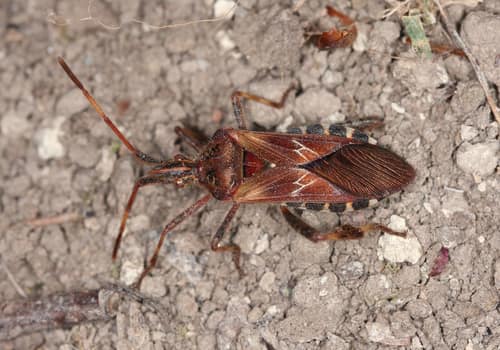
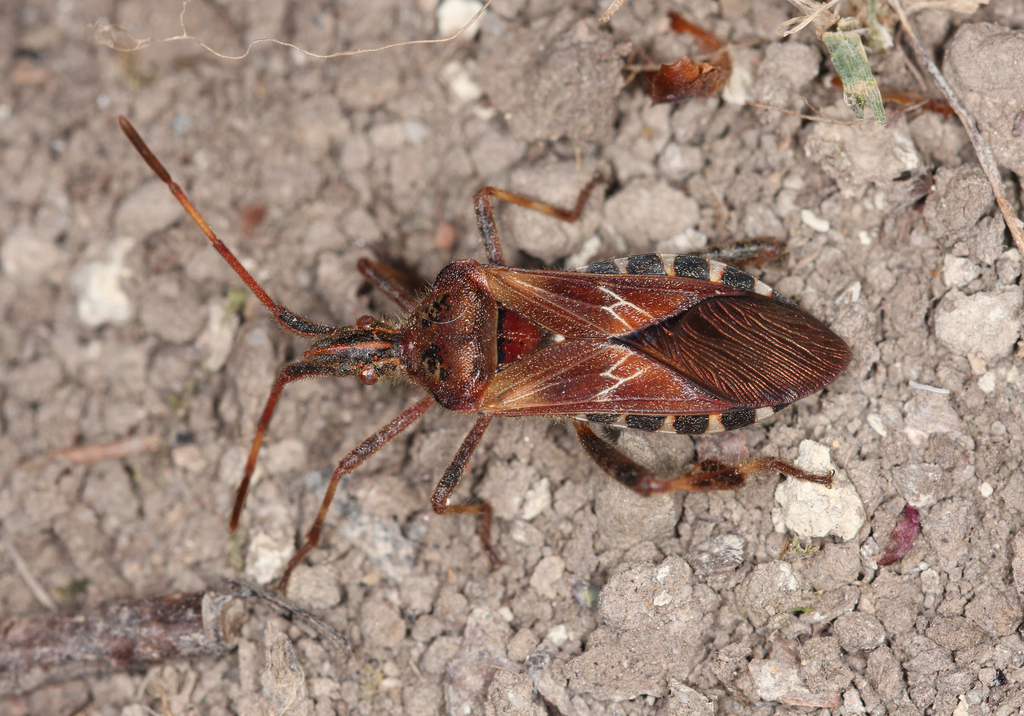
—observations
—countries
—peak records
Not EvaluatedConservation statusIUCN Red List categoriesLCNTVUENCREWEXNot Evaluated — not placed on the risk ladderRed List categories, explained →
Diet & prey
- Pine seed pulp
- Douglas-fir cones
- Spruce seed sap
Predators
- Insectivorous birds
- Spiders
- Assassin bugs
ThreatsSevere winter freezes, targeted insecticide application, and predation
HabitatsConiferous forests, mixed woodlands, parks, suburban gardens, and buildings
Life span9–12 months
Size / weightNot available
Classification
- OrderHemiptera
- FamilyCoreidae
- GenusLeptoglossus
- SpeciesLeptoglossus occidentalis
Range data is not available yet.
Interaction riskLow
- Low
- Moderate
- High
- Very high
- Why interaction risk is low
- Harmless to humans; safe to observe at a normal distance.
Responsible observation
- Indoor Removal: Gently trap indoors with a cup and cardboard to release outside without triggering their scent defense.
- Identification Check: Look for distinct flattened leaf-like expansions on the hind legs to separate it from stink bugs.
- Cone Inspection: Examine immature pine or Douglas-fir cones in midsummer to spot developing reddish-brown nymphs.
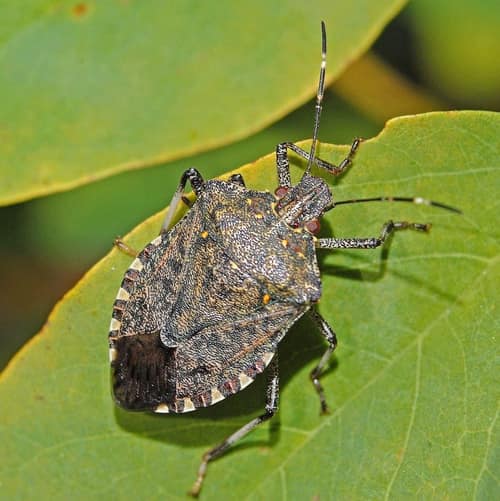
Ecological Look-Alike (c) Kimberly, some rights reserved (CC BY), uploaded by Kimberly · cc-by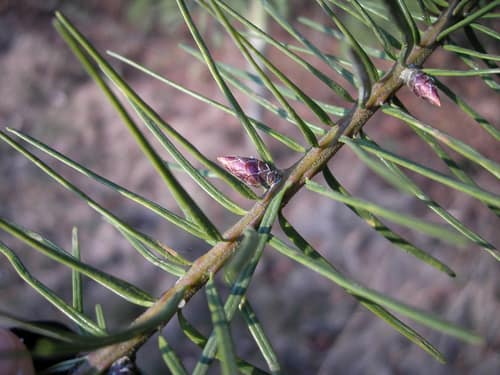
Host Plant (c) Danny Steaven, some rights reserved (CC BY-SA) · cc-by-sa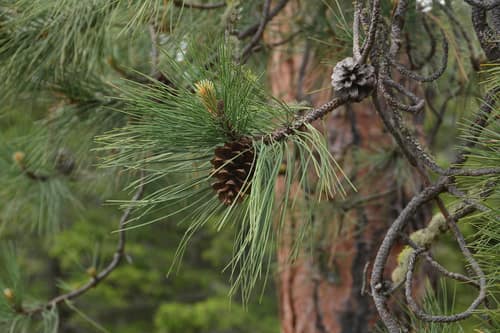
Host Plant no rights reserved, uploaded by Julia Carr · cc0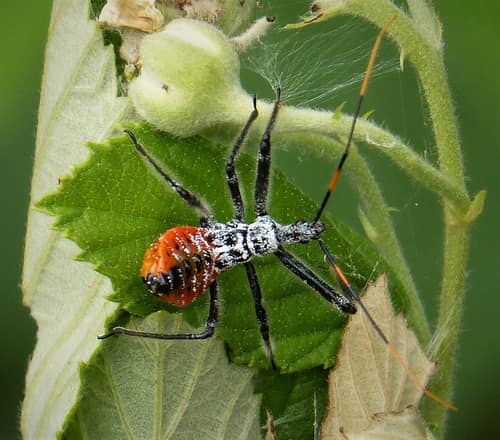
Predator (c) gailhampshire, some rights reserved (CC BY) · cc-by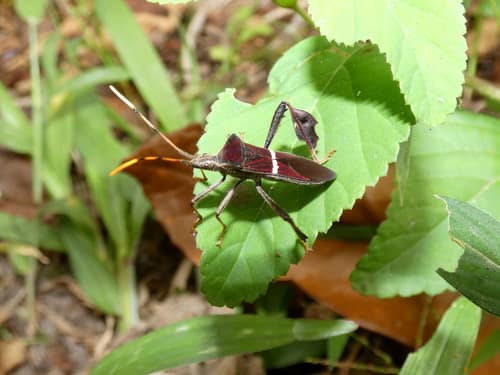
Close Relative (c) Kai Squires, some rights reserved (CC BY), uploaded by Kai Squires · cc-by
Help improve the field guideSomething wrong?
Checking your Fauna account…Report a name, category, or profile issue for review.