
Invertebrate · GBIF taxon 4648497
Murray Crayfish
Euastacus armatusAlso known as Murray River Crayfish, Spiny Freshwater Cray, Murray Cray, Spiny Crayfish
Murray crayfish are the second largest freshwater crayfish species in the world, recognizable by their dark green carapace and contrasting bright white pincers. They dig extensive burrows into muddy riverbanks along the Murray and Murrumbidgee river systems, emerging primarily at night to forage. Females take up to nine years to reach sexual maturity and carry their eggs under their tails through the cold winter months, making populations slow to recover from disturbances.
FreshwaterAquaticCrustacean
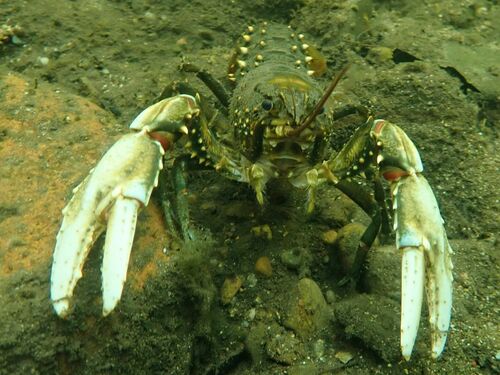
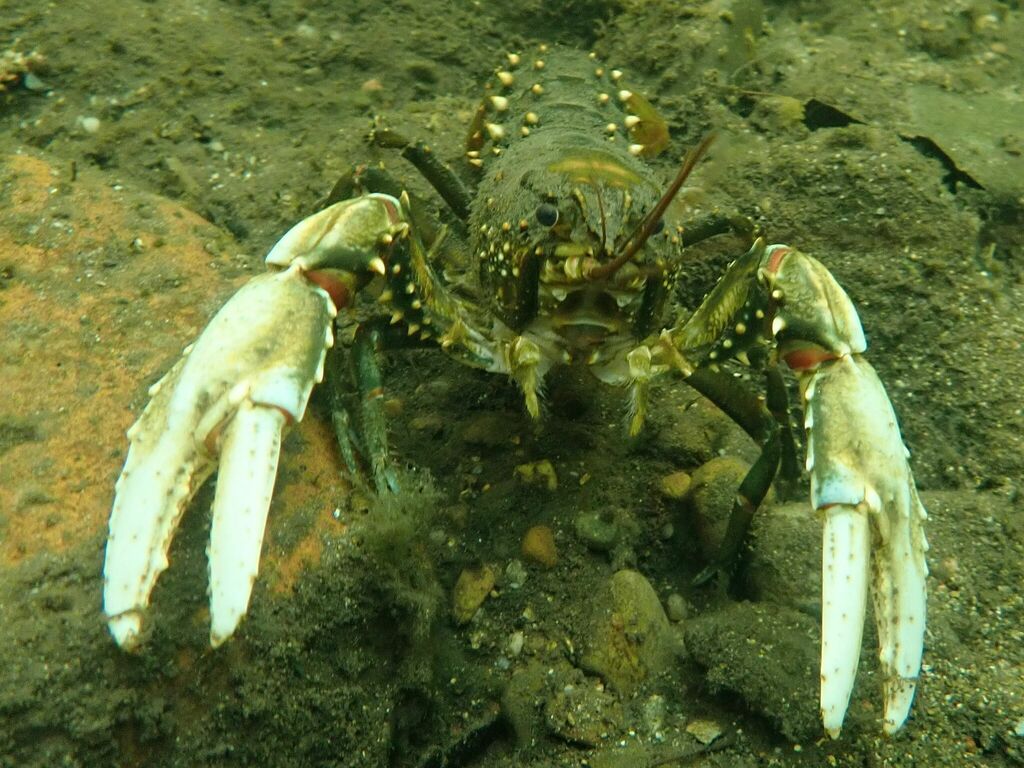
—observations
—countries
—peak records
Data DeficientConservation statusIUCN Red List categoriesLCNTVUENCREWEXData Deficient — not placed on the risk ladderRed List categories, explained →
Diet & prey
- Aquatic insects
- Submerged leaves
- River detritus
Predators
- Murray cod
- Trout cod
- Water rats
ThreatsOverfishing, river regulation, loss of submerged woody debris, blackwater events, climate change
HabitatsFlowing rivers, major streams, and clear tributaries within the Murray-Darling basin
Life span20–30 years
Size / weightNot available
Classification
- FamilyParastacidae
- SpeciesEuastacus armatus
Range data is not available yet.
Interaction riskLow
- Low
- Moderate
- High
- Very high
- Why interaction risk is low
- Large claws can deliver a painful pinch; observe from the riverbank or handle with care.
- Why it is dangerous
- Large claws exert high pressure and can easily pinch, tear skin, or crush fingers during defense.
- How to recognize a risky encounter
- Distinguished by large bright white claws and heavy spiny ridges along the green body.
- What to do
- Avoid placing hands into submerged bank holes and hold behind the carapace if handling.
- What to notice
- Identified by white claws and spiny tail segments in southern Australian river systems.
- Support conservation
- Observe quietly from riverbanks and adhere to all local conservation laws and fishing closures.
Responsible observation
- Riverbank Spotting: Search clear, flowing pools at dawn or dusk when individuals venture out of burrows.
- Observe Safely: Keep fingers clear of powerful white claws when viewing caught individuals.
- Respect Regulations: Follow all local size limits, gear restrictions, and closed seasons strictly.
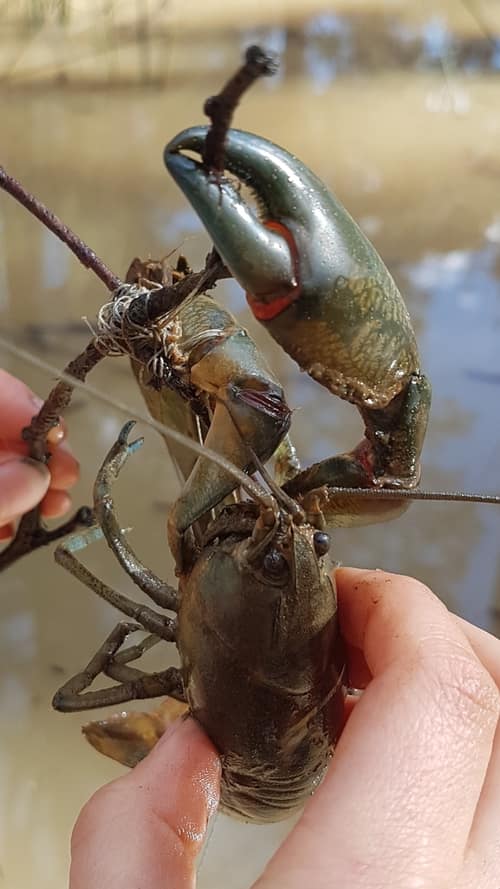
Competitor (c) Peter Crowcroft, some rights reserved (CC BY) · cc-by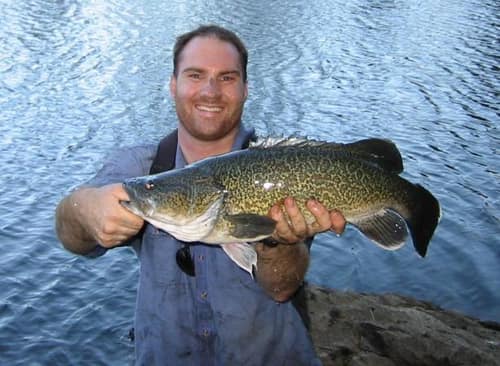
Predator (c) anonymous, some rights reserved (CC BY-SA) · cc-by-sa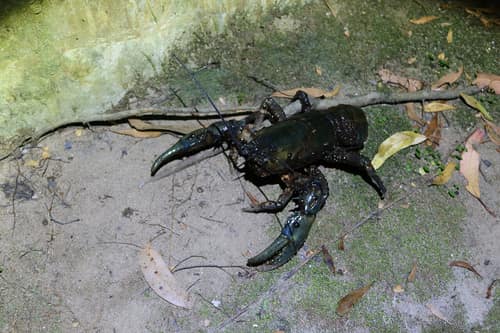
Close Relative Kiri Bee / CC BY 4.0 · cc-by
Help improve the field guideSomething wrong?
Checking your Fauna account…Report a name, category, or profile issue for review.