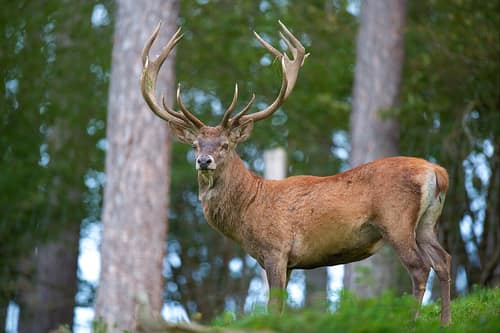
Also known as Japanese Deer, Northern Spotted Deer, Spotted Deer
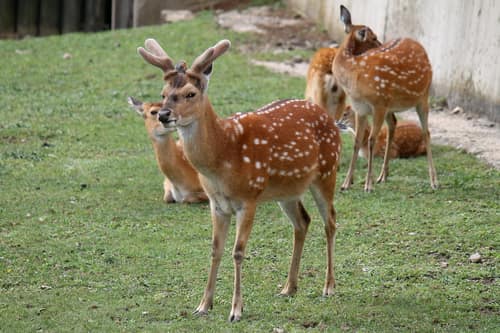
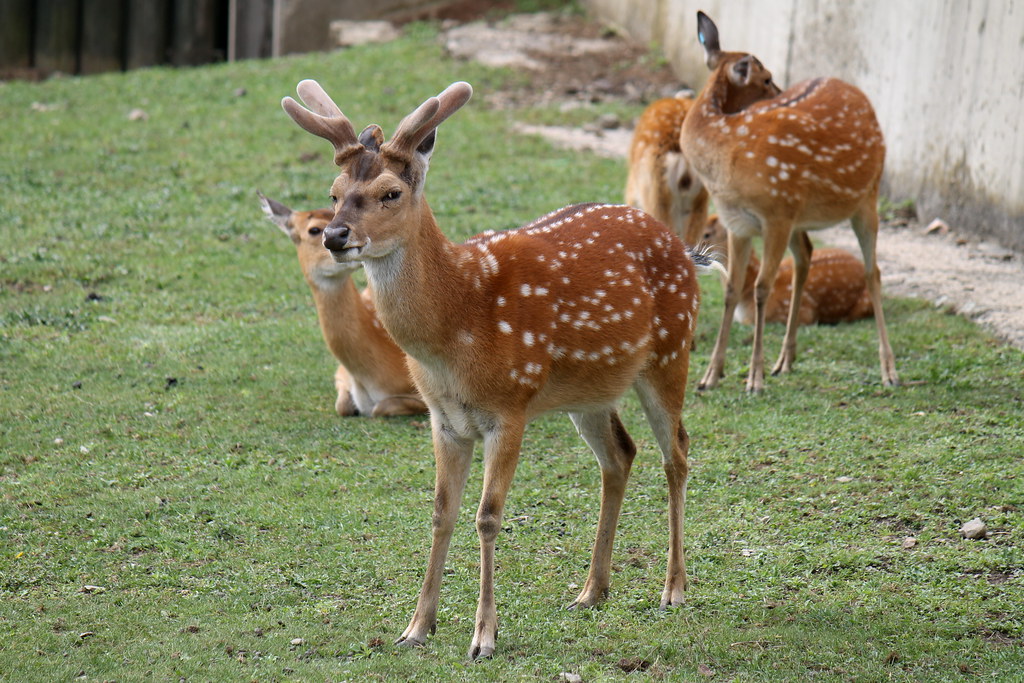
Sika deer are agile forest ungulates recognized by their high-pitched whistling alarm calls and distinctively flared white rump patches. Stags establish rutting territories in autumn through loud multi-pitch bugling and vigorous ground thrashing with their antlers. Originally revered as sacred messengers in Japanese tradition, thriving populations now actively shape woodland understories through heavy browsing on shrubs and young saplings.
Grasses, sedges, dwarf bamboo, fallen leaves, acorns, and tree bark
Predators
Gray Wolf
Amur Leopard
Brown Bear
ThreatsHabitat fragmentation, traffic collisions, overgrazing culls, and hybridization
HabitatsTemperate mixed deciduous forests, montane woodlands, and coastal marshes
Life span15–20 years
Size / weightNot available
Classification
FamilyCervidae
SpeciesCervus nippon
Range & activity
Native Introduced
Native range in olive; established introduced range in rust.
Safe observation
Interaction riskHigh
Low
Moderate
High
Very high
Why interaction risk is high
Stags can charge during the autumn rut and deer harbor disease-bearing ticks; observe from a distance.
Why it is dangerous
Territorial stags can charge with sharp multi-tined antlers, while individuals frequently host ixodid ticks capable of transmitting Lyme disease and other pathogens.
How to recognize a risky encounter
Recognizable by the compact head, white heart-shaped rump patch bordered by black, and white flank spots retained into adulthood.
What to do
Maintain a minimum buffer of 25 meters, back away steadily if a stag lowers its head, and never attempt to approach or pet wild individuals.
Responsible observation
Autumn Vigilance: Give rutting stags wide clearance from September to November when hormone levels trigger aggressive charges.
Do Not Feed: Refrain from offering human food or bread, which causes severe ruminal acidosis and alters wild behavior.
Tick Prevention: Inspect clothing and skin thoroughly after walking through tall grasses or forest edge habitats where herds congregate.