
Mammal · GBIF taxon 2436846
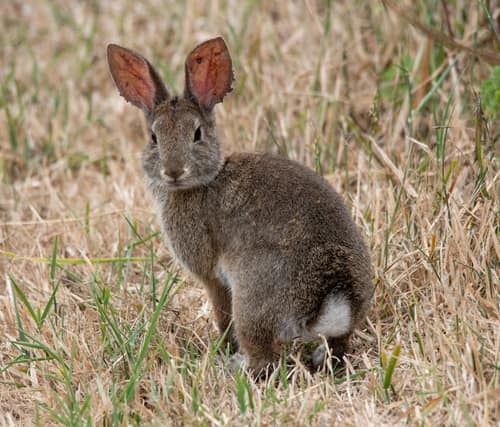
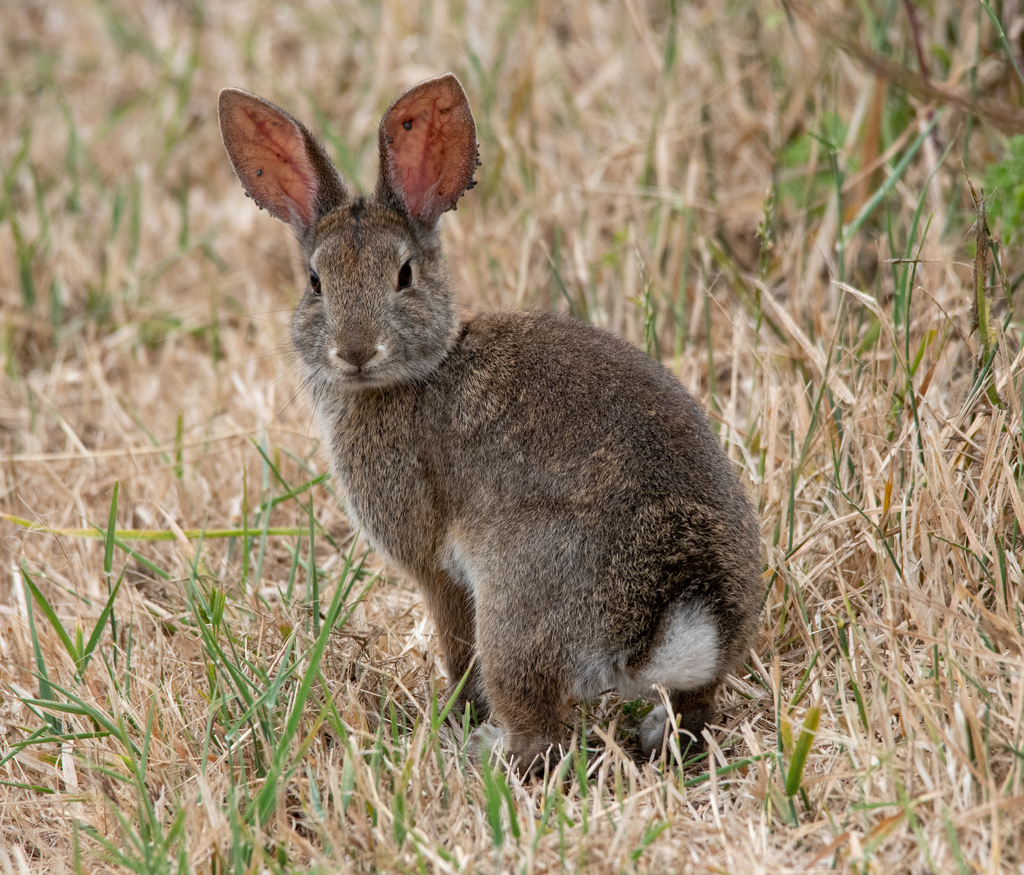
Brush Rabbit
Sylvilagus bachmaniAlso known as Western Brush Rabbit, Californian Brush Rabbit
Brush rabbits rarely venture more than a few meters from dense, tangled undergrowth, maintaining intricate runway tunnels beneath chaparral and brambles for immediate escape. They forage most actively at twilight, clipping grasses, forbs, and tender bark while keeping their ears swiveling for approaching danger. Unlike many burrowing lagomorphs, mothers nurse their litters in shallow, grass-lined surface depressions hidden deep inside impenetrable briars.
HerbivoreCrepuscularChaparral
 1 / 7
1 / 7—observations
—countries
—peak records
Least ConcernConservation statusIUCN Red List categoriesLCNTVUENCREWEXLeast ConcernRed List categories, explained →
Diet & prey
- Grasses and Sedges
- Clover and Forbs
- Blackberry Shoots
Predators
- Coyote
- Bobcat
- Red-tailed Hawk
ThreatsHabitat loss from coastal development, invasive predators, and rabbit hemorrhagic disease (RHDV2)
HabitatsCoastal sage scrub, chaparral, dense brambles, and riparian thickets
Life span1–3 years in the wild
Size / weightNot available
Classification
- FamilyLeporidae
- SpeciesSylvilagus bachmani
Native
Interaction riskModerate
- Low
- Moderate
- High
- Very high
- Why interaction risk is moderate
- Wild rabbits can host fleas and ticks carrying tularemia; observe peacefully from a distance and avoid handling.
- Why it is dangerous
- Wild lagomorphs can harbor Francisella tularensis bacteria (tularemia) as well as vector ticks and fleas.
- How to recognize a risky encounter
- Small, uniform grayish-brown coat, small ears, and an inconspicuously dingy tail set it apart from larger cottontails.
- What to do
- Never handle live or deceased individuals; supervise pets to prevent contact with wild rabbits or their nesting scrapes.
Responsible observation
- Spotting: Scan quiet edges of dense briar thickets and chaparral at dawn or dusk.
- Quiet Approach: Stand still when one emerges, as quick steps send it bolting into cover.
- Pet Etiquette: Keep dogs leashed near scrub margins to protect nesting rabbits.
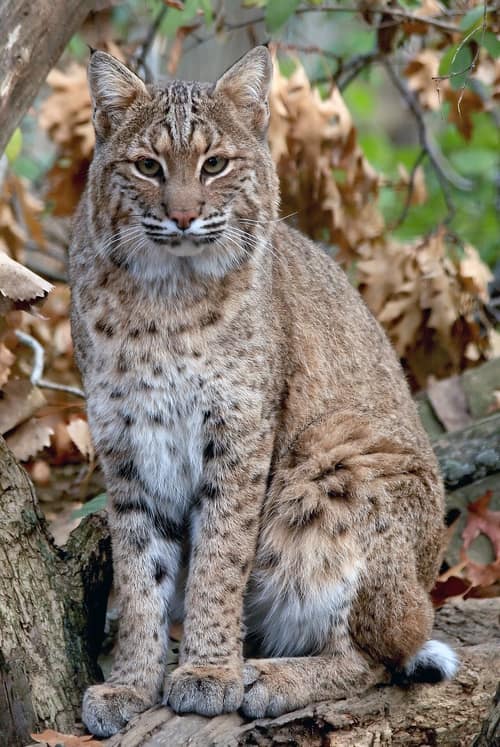
Predator Becker1999 (Paul and Cathy) / CC BY 2.0 · cc-by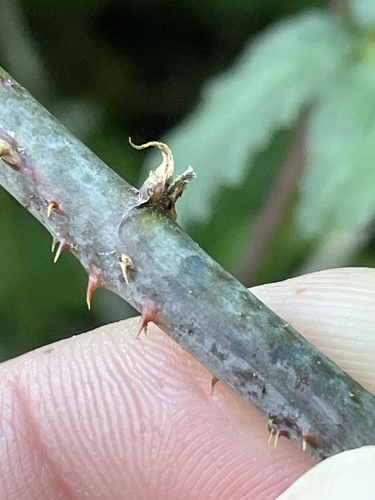
Host Plant no rights reserved, uploaded by Tom Erler · cc0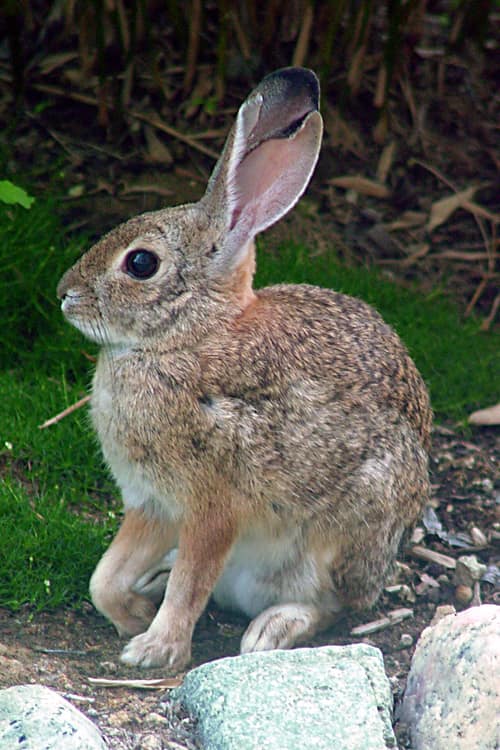
Close Relative Holly Cheng / CC BY-SA 3.0 · cc-by-sa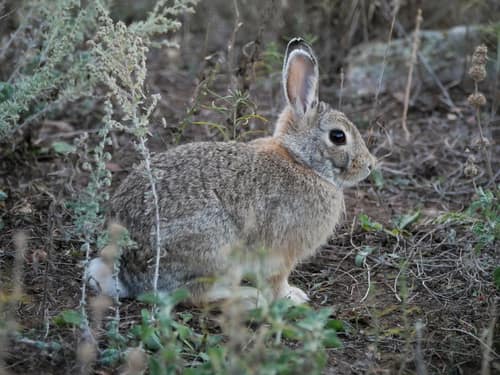
Close Relative (c) ayden, some rights reserved (CC BY), uploaded by ayden · cc-by
Help improve the field guideSomething wrong?
Checking your Fauna account…Report a name, category, or profile issue for review.