
Mammal · GBIF taxon 2435079
Mainland Clouded Leopard
Neofelis nebulosaAlso known as Clouded Leopard
Mainland clouded leopards navigate dense forest canopies with astonishing acrobatics, aided by rotating ankle joints that allow them to descend tree trunks headfirst like squirrels. Equipped with the longest canine teeth relative to skull size of any living cat, they hunt both in the trees and on the ground under cover of darkness. Solitary and elusive, they communicate across the jungle through low-frequency chuffs, mewing, and scent markings rather than roaring.
CarnivoreNocturnalArboreal
—observations
—countries
—peak records
VulnerableConservation statusIUCN Red List categoriesLCNTVUENCREWEXVulnerableRed List categories, explained →
Diet & prey
- Southern Pig-tailed Macaque
- Barking Deer
- Malayan Pangolin
Predators
- Tiger
- Leopard
- Dhole
ThreatsHabitat destruction from deforestation and commercial agriculture, along with poaching for skins and bones
HabitatsPrimary evergreen tropical rainforests, logged forests, and foothill woodlands
Life span11–17 years
Size / weightNot available
Classification
- FamilyFelidae
- SpeciesNeofelis nebulosa
Native
Interaction riskHigh
- Low
- Moderate
- High
- Very high
- Why interaction risk is high
- Shy and avoids humans, but capable of inflicting deep puncture bites if cornered or restrained.
- Why it is dangerous
- Massive canine teeth and powerful jaw muscles can cause severe lacerations, puncture trauma, and secondary bacterial infections.
- How to recognize a risky encounter
- Look for large cloud-like dark blotches on a yellowish-brown coat and a very thick, ringed tail nearly as long as the body.
- What to do
- Never corner or approach a wild individual, and give any spotted cat an immediate, unobstructed escape route.
- What to notice
- Easily identified by its low-slung build, cloud-patterned flank patches, and elusive behavior in deep forest.
- Support conservation
- Maintain silent observation from a distance, avoid spotlights at night, and keep exact GPS coordinates private.
Responsible observation
- Canopy Scanning: Use binoculars to inspect horizontal tree limbs in primary rainforest at dusk and dawn.
- Camera Trapping: Position camera traps along ridgelines and natural game trails where forest cover remains intact.
Competitor Charles J. Sharp / CC BY-SA 4.0 · cc-by-sa
Competitor (c) Raja bandi, some rights reserved (CC BY), uploaded by Raja bandi · cc-by Image unavailable
Neighbor 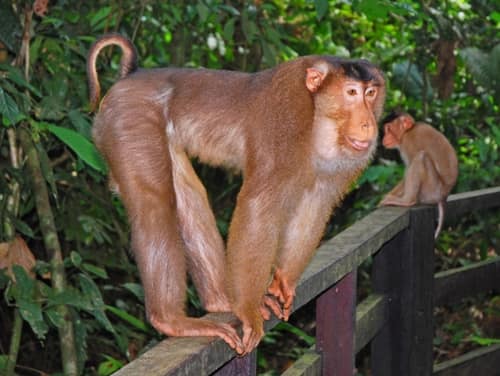
Prey (c) Ettore Balocchi, some rights reserved (CC BY) · cc-by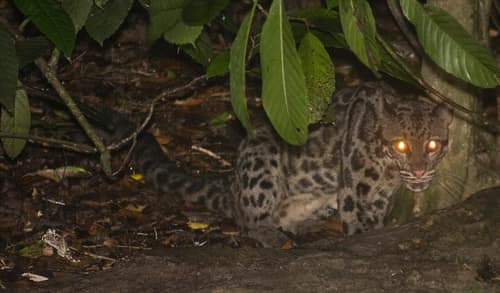
Close Relative www.photosbypaulo.com / CC BY-SA 3.0 · cc-by-sa
Help improve the field guideSomething wrong?
Checking your Fauna account…Report a name, category, or profile issue for review.