Also known as Rooter Skunk, White-backed Hog-nosed Skunk, Western Hog-nosed Skunk
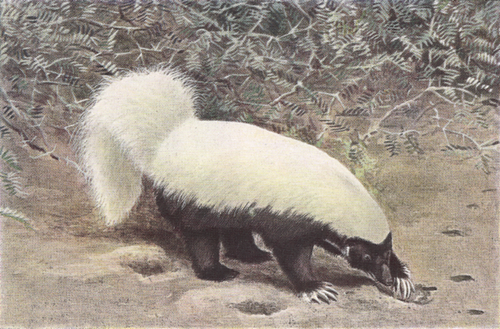
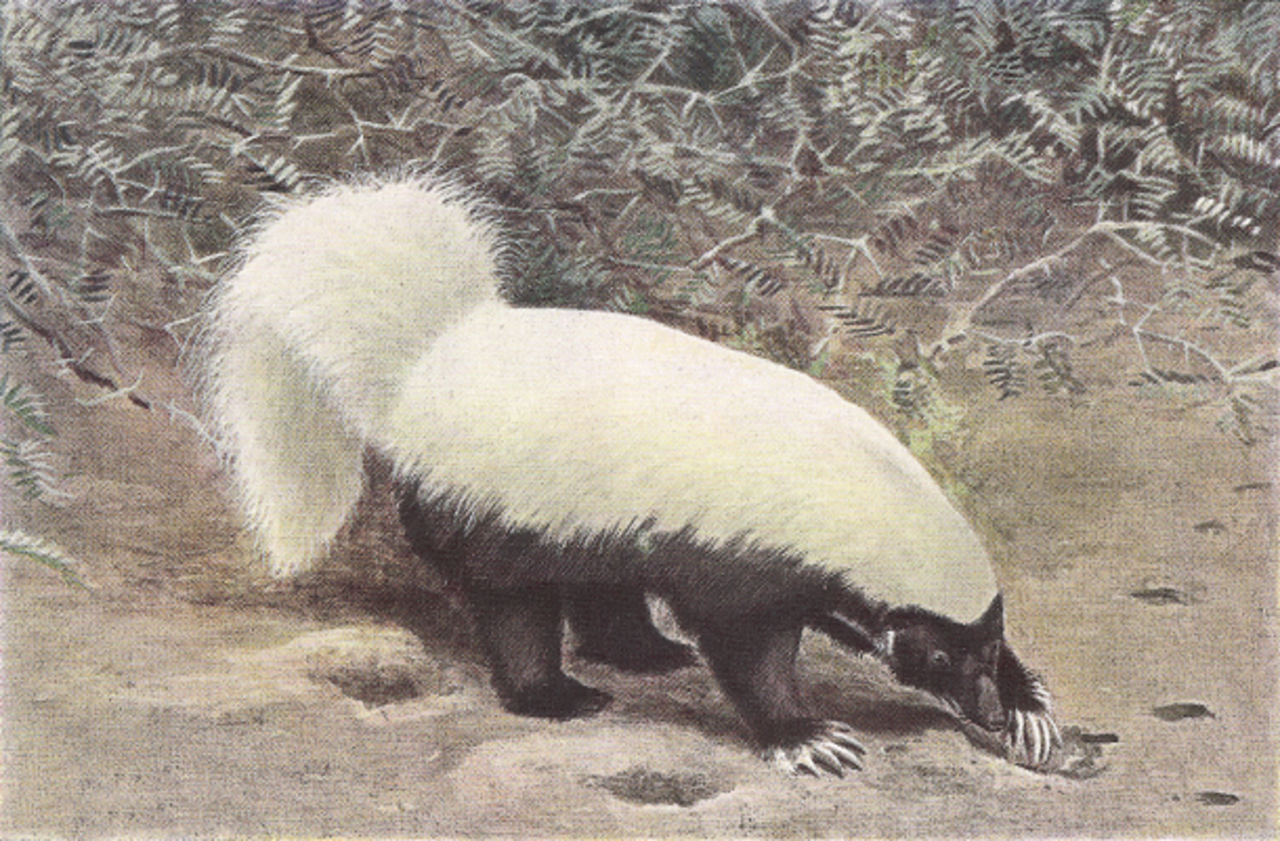
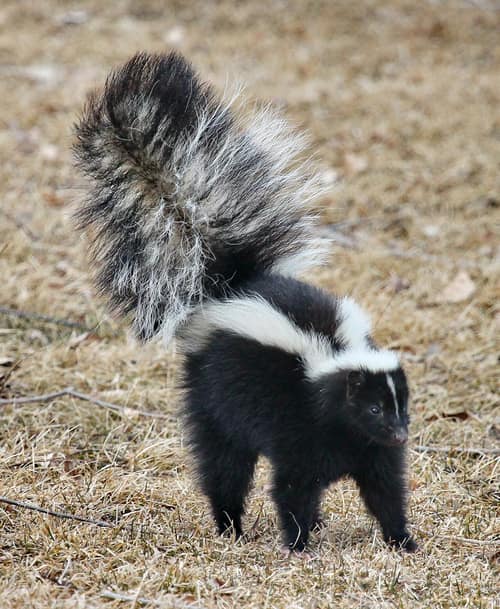
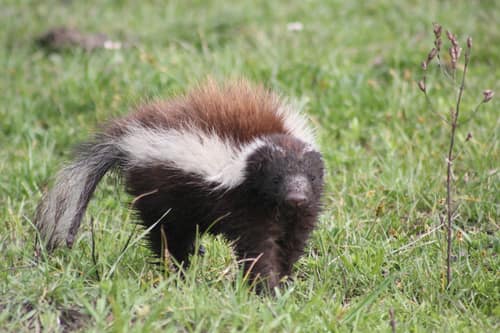
American hog-nosed skunks are sturdy, badger-like omnivores built for heavy excavation, using long claws and a bare, flexible snout to plow through soil and leaf litter. Unlike striped skunks, they bear a solid white back from the crown of the head to the tail tip, contrasting sharply with entirely black flanks and underparts. Largely solitary and nocturnal, they spend their nights snuffling through rocky terrain and woodlands, turning over stones and digging cone-shaped pits in search of grub infestations.
ThreatsHabitat fragmentation, vehicular collisions, and indiscriminate pest control
HabitatsCanyonlands, thorn scrublands, pine-oak woodlands, and rocky hillsides
Life span3–5 years in the wild; up to 10 years in captivity
Size / weightNot available
Classification
FamilyMephitidae
SpeciesConepatus leuconotus
Range & activity
Native
Safe observation
Interaction riskModerate
Low
Moderate
High
Very high
Why interaction risk is moderate
Can spray noxious musk, bite defensively, and carry rabies; keep a respectful distance.
Why it is dangerous
Carries potential rabies transmission through bites, and ejects a volatile sulfur-based musk from anal glands that causes intense temporary burning and nausea.
How to recognize a risky encounter
Recognize by the broad, uninterrupted white pelt along the neck and back, robust body, and elongated, hairless snout.
What to do
Do not corner, approach, or handle; freeze, face the animal calmly, and retreat in the opposite direction.
Responsible observation
Give Space: If an individual raises its tail or stomps its front feet, back away slowly to avoid being sprayed.
Look For Sign: Watch for shallow, cone-shaped diggings and overturned stones along canyon trails at dawn.
Leash Dogs: Keep pets leashed in rocky brush country where skunks shelter under ledges and brush piles.