
Species · GBIF taxon 2415788
Whiting
Merlangius merlangusAlso known as Merling, English Whiting
Whiting are active schooling predators found over muddy and gravelly sea floors across the northeastern Atlantic and adjacent seas. Juveniles spend their first months sheltering beneath the bells of large jellyfish like Cyanea capillata, gaining protection from larger predators until they are ready to join benthic adult shoals. They play a pivotal role in shelf sea food webs, consuming small schooling fish and invertebrates while serving as vital prey for larger cod, hake, and marine mammals.
MarineSchoolingCarnivorous
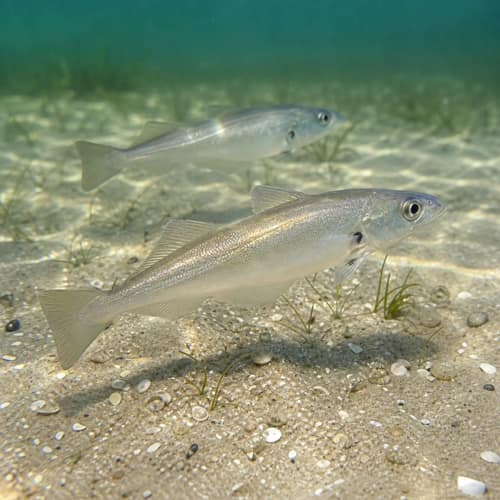
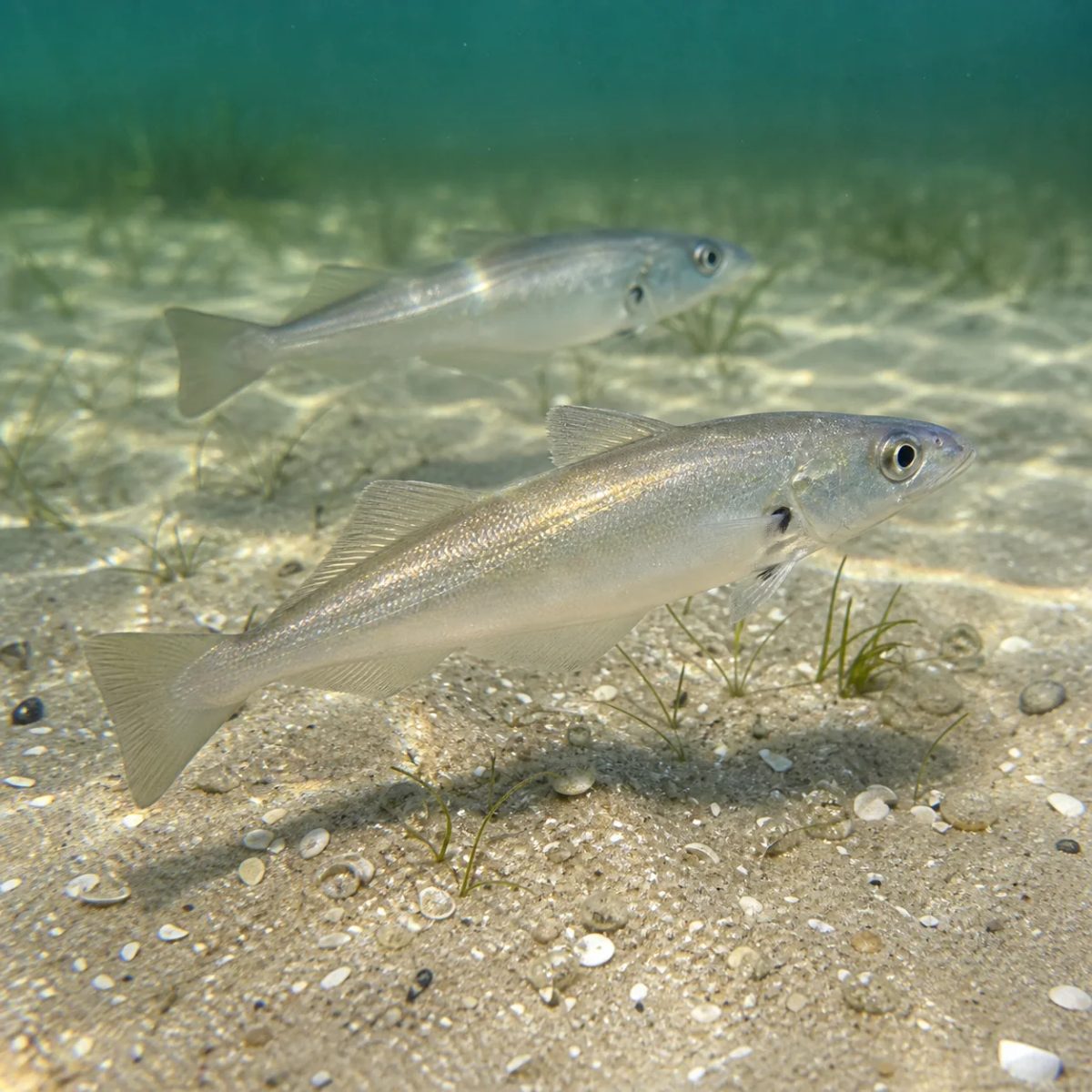
Licensed referenceGeorges Jansoone / CC BY 3.0 · CC BY 3.0
—observations
—countries
—peak records
Least ConcernConservation statusIUCN Red List categoriesLCNTVUENCREWEXLeast ConcernRed List categories, explained →
Diet & prey
- Lesser Sand Eel
- European Sprat
- Brown Shrimp
Predators
- Grey Seal
- Atlantic Cod
- Spiny Dogfish
ThreatsCommercial bottom trawling, overfishing, and habitat degradation
HabitatsContinental shelf waters over mud, sand, and gravel substrates
Life span10–20 years
Size / weightNot available
Classification
- FamilyGadidae
- SpeciesMerlangius merlangus
Range data is not available yet.
Interaction riskLow
- Low
- Moderate
- High
- Very high
- Why interaction risk is low
- Safe to observe at a normal distance.
Responsible observation
- Angling etiquette: Use barbless circle hooks to facilitate safe release when targeting whiting recreationally.
- Underwater spotting: Scan sandy depressions near deeper drop-offs when diving coastal shelves.
- Sustainable sourcing: Consult regional fishery guides to choose sustainably managed catches.
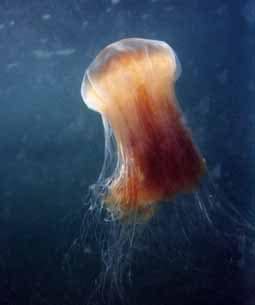
Symbiont Wikimedia Commons / CC BY-SA 3.0 · cc-by-sa Image unavailable
Prey 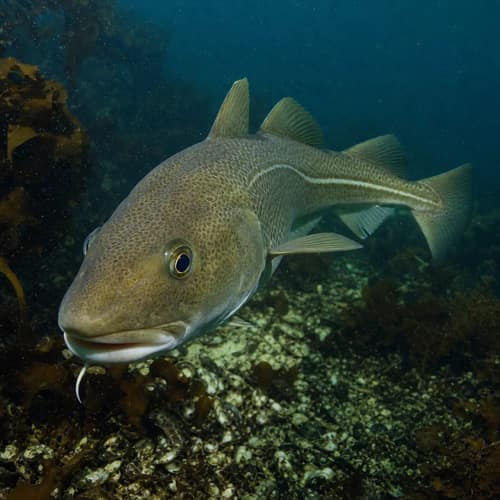
Same Family NOAA / Public Domain (NOAA) · Public Domain (NOAA)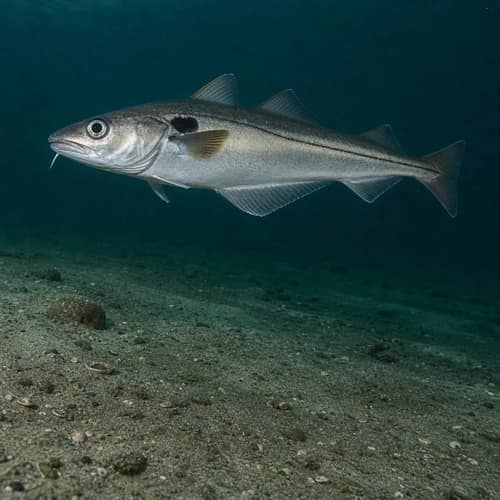
Same Family J. Deeds FDA / Public Domain (FDA) · Public Domain (FDA)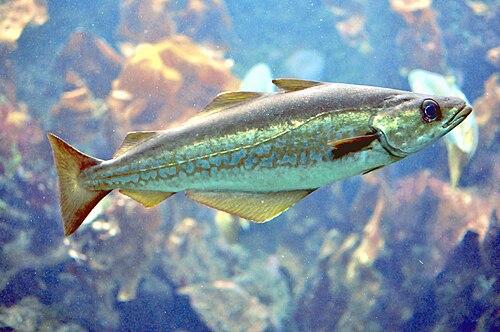
Same Family This illustration was made by Citron You must credit this : Citron / CC-BY-SA-3.0 / CC BY-SA 3.0 · cc-by-sa
Help improve the field guideSomething wrong?
Checking your Fauna account…Report a name, category, or profile issue for review.