
Invertebrate · GBIF taxon 2271961
Leather Star
Dermasterias imbricataAlso known as Garlic Star
Leather stars glide across rocky reefs and kelp forests on thousands of hydraulic tube feet, easily recognized by their smooth, slippery texture and a distinct garlic-like scent. Unlike spiny sea stars, their aboral surface is covered by a thick, velvety skin embedded with tiny red, orange, and olive-brown calcareous plates. They play a vital predatory role in temperate coastal ecosystems, using an eversible stomach to digest sessile invertebrates directly against the rock.
MarineTidepoolInvertebrate
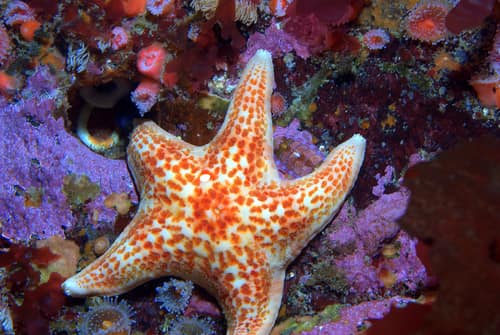
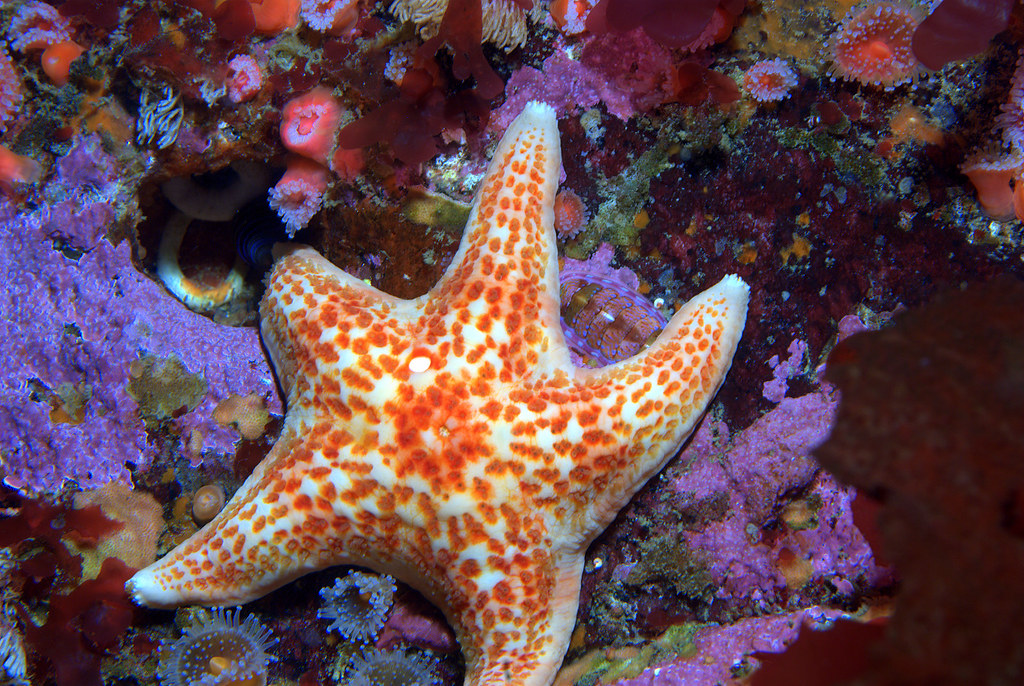
—observations
—countries
—peak records
Not EvaluatedConservation statusIUCN Red List categoriesLCNTVUENCREWEXNot Evaluated — not placed on the risk ladderRed List categories, explained →
Diet & prey
- Plumose Anemone
- Purple Sea Urchin
- Orange Sea Pen
Predators
- Morning Sun Star
- Sea Otter
- Glaucous-winged Gull
ThreatsSea star wasting disease, warming ocean temperatures, and coastal water pollution
HabitatsLow intertidal rocky shores, subtidal rocky reefs, and kelp forests down to 100 m
Life span15–25 years
Size / weightNot available
Classification
- FamilyAsteropseidae
- SpeciesDermasterias imbricata
Range data is not available yet.
Interaction riskLow
- Low
- Moderate
- High
- Very high
- Why interaction risk is low
- Safe to observe at a normal distance.
Responsible observation
- Low Tide Etiquette: Step carefully on bare rocks to avoid crushing individuals submerged in shallow pools.
- Handling Precaution: Leave them submerged in water; removing them causes stress and damages delicate tube feet.
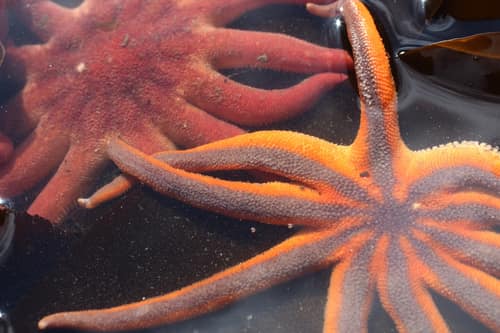
Predator (c) Erin McKittrick, some rights reserved (CC BY), uploaded by Erin McKittrick · cc-by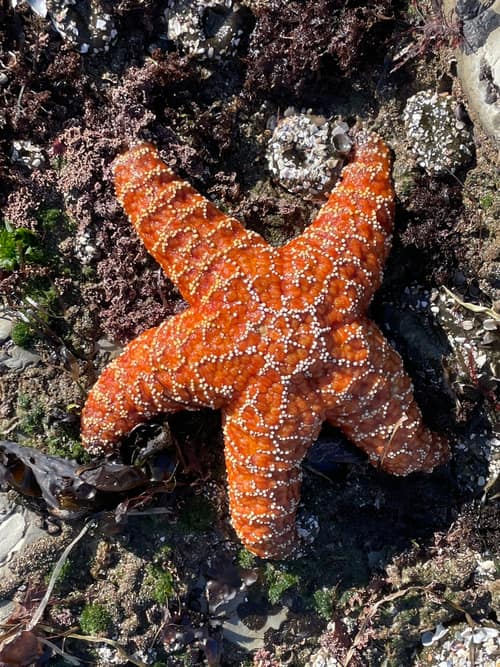
Competitor no rights reserved · cc0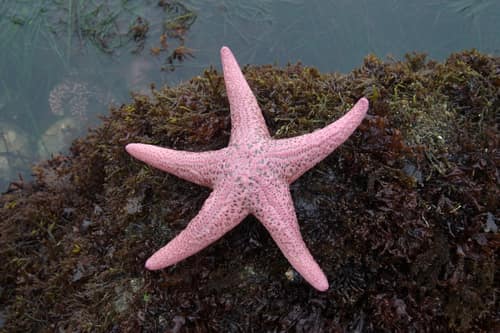
Neighbor (c) Jerry Kirkhart, some rights reserved (CC BY) · cc-by Image unavailable
Prey 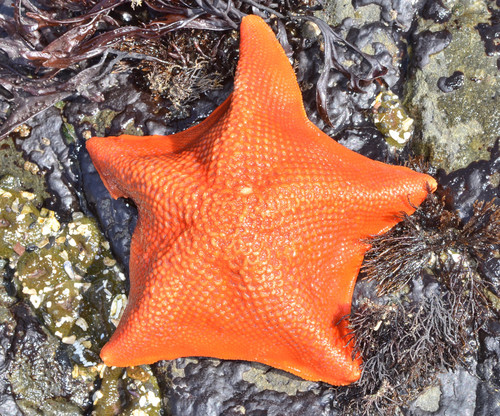
Neighbor (c) Don Loarie, some rights reserved (CC BY) · cc-by
Help improve the field guideSomething wrong?
Checking your Fauna account…Report a name, category, or profile issue for review.