
Insect · GBIF taxon 1325405
California Harvester Ant
Pogonomyrmex californicusAlso known as Southern California Harvester Ant
California harvester ants construct low, wide mounds surrounded by circular clearings in arid soils, creating prominent focal points across scrub and desert landscapes. Workers forage during the cooler morning and late afternoon hours, gathering native grass and forb seeds into deep underground granaries that sustain the colony during prolonged droughts. While queens in most populations found colonies alone, certain coastal populations practice cooperative nest-founding where multiple queens share a burrow to boost worker production.
Seed DisperserDesert DwellerVenomous
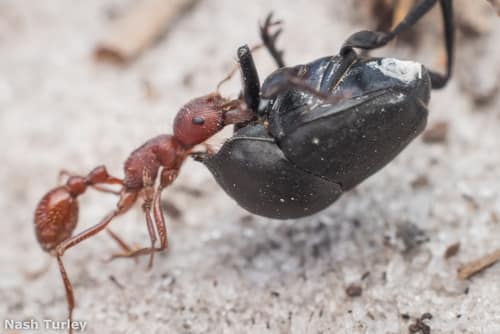
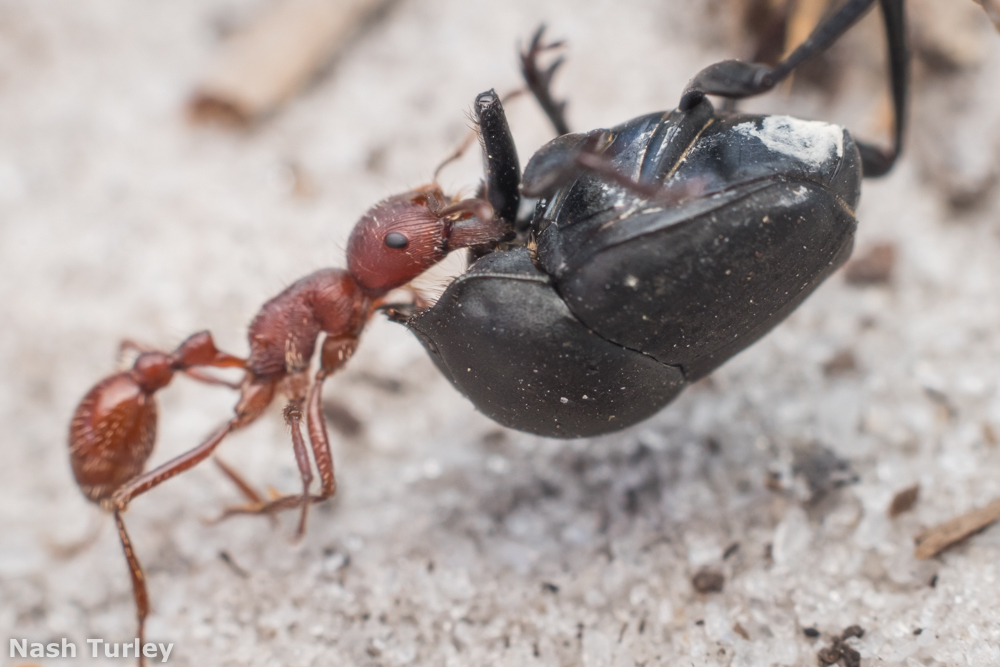 1 / 7
1 / 7—observations
—countries
—peak records
Not EvaluatedConservation statusIUCN Red List categoriesLCNTVUENCREWEXNot Evaluated — not placed on the risk ladderRed List categories, explained →
Diet & prey
- Desert grass seeds
- Mustard seeds
- Small arthropod scavenge
Predators
- Coast Horned Lizard
- Desert Spiny Lizard
- Ant-lion larvae
ThreatsHabitat loss from urban sprawl, invasive Argentine ants, and pesticide runoff
HabitatsDeserts, coastal sage scrub, chaparral, and sandy plains
Life spanWorkers live 6 to 12 months; queens can live over 15 years
Size / weightNot available
Classification
- FamilyFormicidae
- SpeciesPogonomyrmex californicus
Range data is not available yet.
Interaction riskVery high
- Low
- Moderate
- High
- Very high
- Why interaction risk is very high
- Possesses a very painful sting that can trigger severe allergic reactions; maintain distance from active mounds.
- Why it is dangerous
- Possesses potent peptide-rich venom injected via a sting, causing intense burning pain lasting hours and posing an anaphylaxis hazard.
- How to recognize a risky encounter
- Recognizable by its vibrant orange-red to reddish-brown coloration, large blocky head, and deliberate ground foraging movements.
- What to do
- Give active nest entrances a wide berth and immediately brush away any ants climbing footwear before they can sting.
Responsible observation
- Ground Awareness: Watch your step near circular bare clearings on sandy paths to avoid stepping on active entrance holes.
- Basking Observation: Watch workers carrying seeds during warm morning hours from a distance of at least two meters.
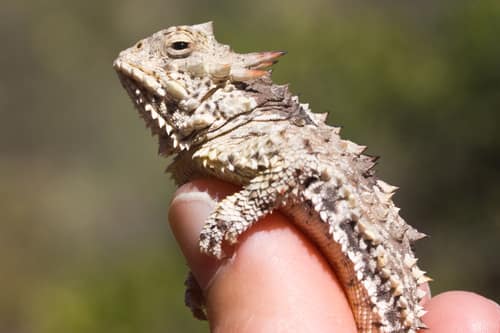
Predator (c) Ken-ichi Ueda, some rights reserved (CC BY) · cc-by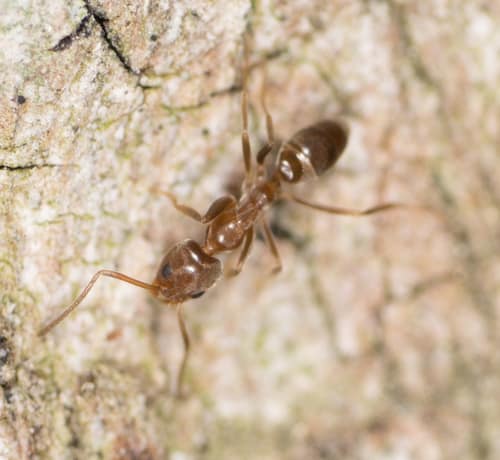
Competitor no rights reserved, uploaded by Jesse Rorabaugh · cc0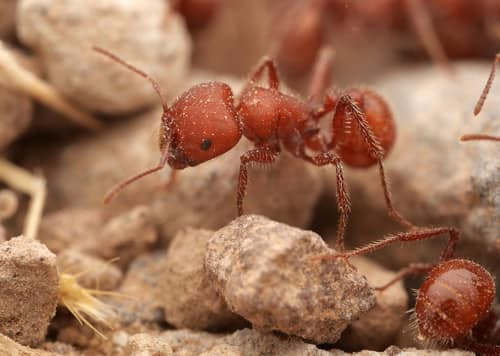
Close Relative no rights reserved, uploaded by Philipp Hoenle · cc0
Help improve the field guideSomething wrong?
Checking your Fauna account…Report a name, category, or profile issue for review.